

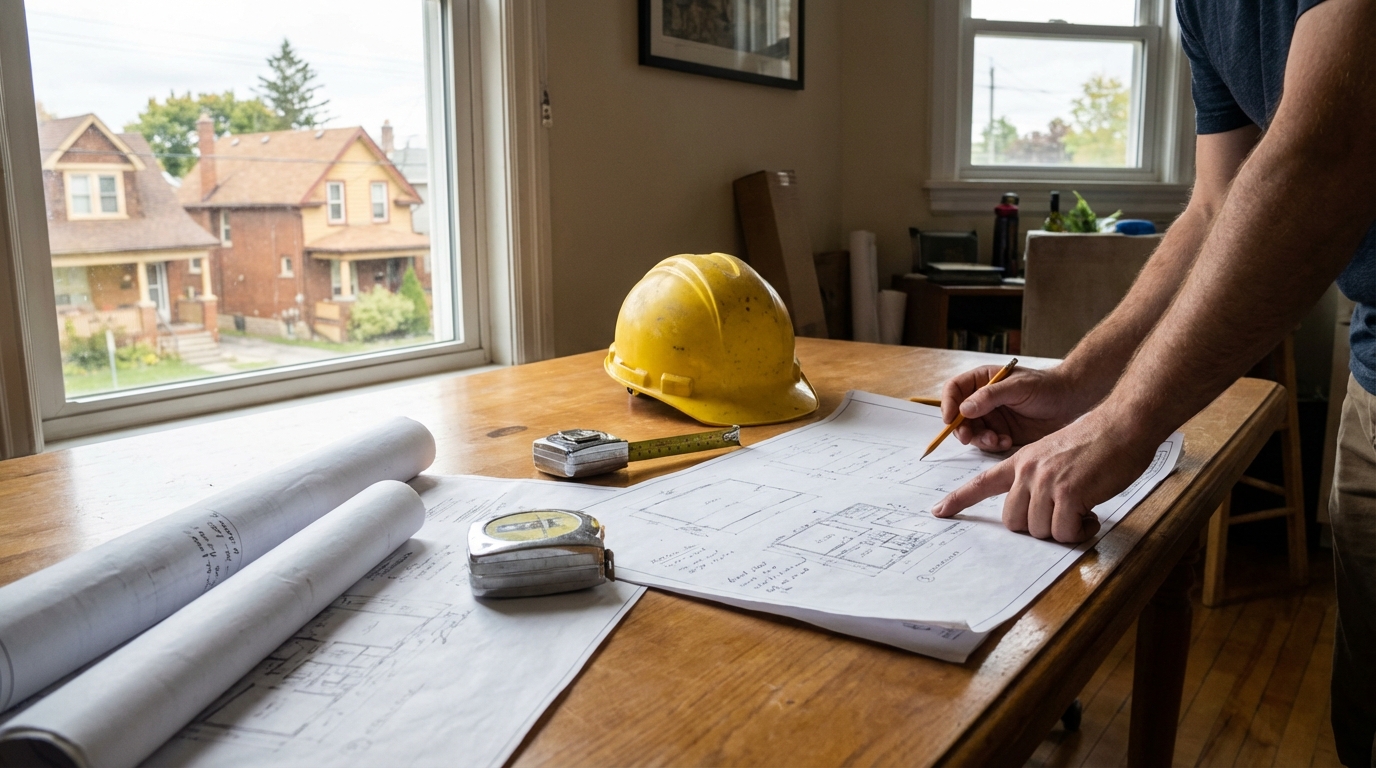
Every year, thousands of Canadian homeowners complete renovations without the required permits — saving a few hundred dollars upfront and risking tens of thousands in consequences later. Unpermitted work can void your home insurance, block your mortgage renewal, require tear-down when you sell, and expose you to fines from your municipality. The permit process exists not to slow you down but to ensure the work is safe and that your home retains its value. This guide tells you exactly what requires a permit and how to navigate the process efficiently.
The Problem
A homeowner in Ontario completed a basement apartment without permits. When they sold, the buyer's home inspector flagged it. The buyer demanded a $45,000 price reduction to cover permit fees, required inspections, and potential work that didn't meet code. The permit would have cost $800.
What Requires a Building Permit?
| Renovation Type | Permit Required? | Typical Permit Cost |
|---|---|---|
| New deck (over 24" off ground) | Yes | $150–$500 |
| Basement development / finishing | Yes | $400–$1,200 |
| Secondary suite / basement apartment | Yes (plus zoning approval) | $800–$3,000 |
| Addition (new square footage) | Yes | $500–$5,000+ |
| Structural wall removal | Yes | $250–$800 |
| Electrical panel upgrade | Yes (electrical permit) | $100–$350 |
| Plumbing (new drain or water lines) | Yes (plumbing permit) | $100–$500 |
| Fence (most municipalities) | Check locally — often no | $0–$200 |
| Interior painting / flooring | No | $0 |
| Kitchen cabinet replacement | No (unless moving plumbing) | $0 |
| Window replacement (same size) | No in most provinces | $0 |
| Roof replacement (same materials) | No in most provinces | $0 |
How the Permit Process Works
The process varies by municipality but typically follows these steps:
- Step 1: Submit application — Most municipalities accept applications online. You'll need scaled drawings (floor plan showing dimensions, structural details for load-bearing changes). For simple projects, hand-drawn sketches often suffice. For complex work, hire a designer or architect.
- Step 2: Review period — Municipal permit offices review your drawings for code compliance. Simple permits: 1–5 business days. Complex: 2–8 weeks in major cities. Rush review is available for an additional fee ($100–$500) in most municipalities.
- Step 3: Work begins — Post the permit on-site (or in your window). Your contractor must not cover any structural, electrical, or plumbing work until it passes inspection.
- Step 4: Inspections — The inspector visits at key stages (framing, electrical rough-in, insulation, final). Inspections are included in the permit fee. Failed inspections result in required corrections before proceeding.
- Step 5: Final sign-off — Once all inspections pass, you receive a Certificate of Occupancy or final approval. Keep this document permanently. The National Building Code of Canada sets minimum standards all permits enforce.
Permit Costs by Province
| Province | Permit Fee Basis | Example: $50,000 Basement Finish |
|---|---|---|
| Ontario | % of construction value (~0.5–1.5%) | ~$500–$750 |
| British Columbia | % of construction value (~1.0–2.0%) | ~$700–$1,000 |
| Alberta | Per-project flat fee + % over threshold | ~$400–$800 |
| Quebec | Flat fee by project type (municipality-set) | ~$300–$700 |
| Manitoba | % of construction value (~0.75–1.5%) | ~$375–$750 |
When Contractors Offer to Skip the Permit
A contractor who suggests skipping a required permit is a red flag — CMHC renovation guidance explains your rights as a homeowner — full stop. They may be unlicensed, cutting corners on code compliance, or simply trying to avoid the inspection that would reveal substandard work. If an inspector finds unpermitted work on your property, you are responsible as the property owner — not the contractor. The consequences: fines ($500–$50,000 depending on municipality), mandatory restoration to original condition, and the renovation cost is effectively doubled.
Before Any Renovation Over $5,000
Call your municipal permit office and describe the work in plain language — they'll tell you whether a permit is required. This call takes 5 minutes. A reputable contractor will include permit fees in their quote as a standard line item. Always ask: "Is a permit required for this work?" If yes: "Will you be pulling it, or am I responsible?" Get the answer in writing.